

Lead generation in digital marketing is one of the most essential processes for businesses wanting to attract potential customers online. It involves identifying, attracting, and converting strangers into prospects who show interest in your products or services.
When done correctly, lead generation helps businesses build predictable revenue, improve customer relationships, and scale faster.
Table of Contents
What Is Lead Generation in Digital Marketing?
Lead generation in digital marketing is the process of attracting individuals online and converting them into leads — people who show interest by taking actions such as:
-
Filling out a form
-
Downloading an ebook
-
Requesting a quote
-
Signing up for a newsletter
-
Booking a consultation
These actions signal that the user might eventually become a customer.
Why Lead Generation Matters
Strong lead generation helps businesses:
-
Build a steady pipeline of potential customers
-
Reduce customer acquisition costs
-
Improve brand visibility
-
Increase conversions and revenue
-
Target audiences more accurately
Without effective lead generation, businesses rely on guesswork instead of strategic growth.
How Lead Generation Works
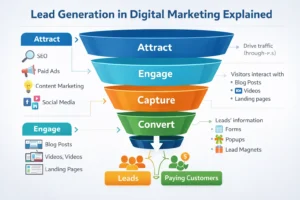
The process typically includes four stages:
1. Attract
Businesses drive traffic through SEO, paid ads, social media, or content marketing.
2. Engage
Visitors interact with valuable content such as blog posts, videos, or landing pages.
3. Capture
Prospects are encouraged to share their contact information using forms, pop-ups, or lead magnets.
4. Convert
Leads are nurtured through email sequences, retargeting, and personalized offers until they become paying customers.
Types of Leads
Marketing Qualified Leads (MQLs)
Prospects who show interest but are not ready to purchase.
Sales Qualified Leads (SQLs)
Prospects who are ready for direct communication with the sales team.
Product Qualified Leads (PQLs)
Users who try a product and show buying intent (common in SaaS).
Service Qualified Leads
Prospects requesting service quotes or consultations.
Top Lead Generation Strategies
1. Search Engine Optimization (SEO)
Optimizing website content helps attract high-intent traffic searching for solutions.
2. Content Marketing
Blogs, videos, and guides educate users and build trust.
3. Social Media Marketing
Platforms like Facebook, Instagram, LinkedIn, and YouTube drive awareness and engagement.
4. Pay-Per-Click Advertising (PPC)
Google Ads and Meta Ads help target the right audience quickly.
5. Landing Pages & Lead Magnets
Ebooks, checklists, templates, and webinars motivate users to submit their information.
6. Email Marketing
Nurtures leads by delivering personalized content and offers.
7. Chatbots & AI Tools
Instant responses increase conversions and reduce drop-offs.
Lead Generation Tools
Some popular tools include:
-
HubSpot
-
Mailchimp
-
Google Ads
-
Meta Ads Manager
-
Semrush
-
Zoho CRM
-
ClickFunnels
These platforms help automate, track, and optimize lead generation campaigns.
Common Mistakes to Avoid
-
Not understanding the target audience
-
Using weak or unclear calls-to-action
-
Driving paid traffic to poorly designed pages
-
Ignoring follow-up sequences
-
Not using analytics to improve campaigns
Avoiding these mistakes ensures your lead generation in digital marketing remains efficient and scalable.
For expert support with creating high-performing lead-generation systems, consider hiring a
digital marketer in kerala
who specializes in conversion-focused digital strategies.
Final Thoughts
Understanding lead generation in digital marketing is essential for businesses aiming to grow their customer base through meaningful online interactions. With the right channels, tools, and strategy, lead generation becomes a powerful engine that drives continuous business growth.

